What Your Random Color Choice Reveals About Your Personality Type
Did you know that the colors you gravitate toward can say a lot about what's going on in your mind? Research suggests that our instinctual color preferences are often tied to our personality traits. So, let's dive into what your random color choice could reveal about your personality type!
Understanding the Science Behind Color Choices
Researchers believe that our brain processes colors in a matter of milliseconds, which allows us to associate different emotions and meanings with various hues. While individual preferences play a role, studies have identified some common patterns among people with similar personality types.
The Colors That Reveal Your Personality
- Blue: People who often choose blue might be seen as more reserved, loyal, and sensitive. They value stability and security, often preferring calm, soothing environments.
- Red: Red enthusiasts tend to be more energetic, passionate, and outgoing. They often crave excitement and stimulation, driving them to seek adventure and social activities.
- Green: Those drawn to green often display a more balanced and rational approach to life. They prioritize nature, harmony, and growth, often seeking careers in eco-friendly or creative fields.
- Yellow: Yellow enthusiasts are known for their positive, optimistic outlooks on life. They often embody creativity, enthusiasm, and a love for learning, making them well-suited for careers in education or the arts.
- Purple: Individuals who gravitate toward purple often reveal a more imaginative, empathetic, and spiritual nature. They may be drawn to careers in psychology, art therapy, or spiritual guidance.
Actionable Takeaways for Your Personality Development
So, what can you do with this newfound knowledge? Here are some practical insights to help you better understand yourself and others:
- Explore your color preferences: Take a moment to browse through your favorite colors, noting any patterns or consistencies. This can offer valuable insights into your emotional needs and preferences.
- Challenge yourself: Test your color preferences in different situations. Do you choose blue when stressed or red when excited? Understanding how your colors interact in various contexts can shed light on areas for personal growth.
- Communicate with confidence: When interacting with others, recognize that their color preferences can reveal their personality traits. This can help you approach conversations with empathy and understanding, building stronger connections with those around you.
Conclusion
While this article only scratches the surface of the complex relationship between color preferences and personality types, it's clear that our instinctual color choices can offer valuable insights into our emotional lives. By exploring our preferences and understanding the science behind color associations, we can gain a deeper appreciation for ourselves and others.
Possessive Pronouns | PPTX
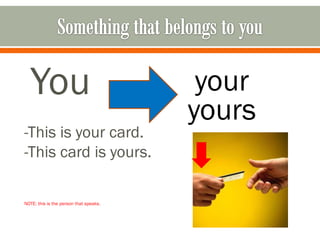
Possessive pronouns | PPTX
Possessive Adjectives . Possessive Pronouns | PPT
Possessive adjectives . possessive pronouns | PPT
Possesive Adjectives | PPT
Possesive adjectives | PPT
Possessive Adjectives . Possessive Pronouns | PPT
Possessive adjectives . possessive pronouns | PPT