
Common Language Mistakes and How to Correct Them
Avoiding common language mistakes can elevate your communication and ensure that your message is conveyed effectively. In various contexts, individuals often get tripped up by subtle differences in expressions, leading to confusion, misinterpretation, or unintended offense. One such instance is the interchangeability of "say" and "tell." Understanding the distinction between these two verbs can greatly enhance your language skills and reduce potential misunderstandings.
The Key Difference: When to Say, When to Tell
In everyday conversation, it's easy to substitute "say" and "tell" without giving much thought to their nuances. However, the difference lies in their connotation and usage. "Say" generally implies the act of speaking or expressing an opinion, while "tell" typically denotes the act of conveying information, often in a more formal or instructive manner.
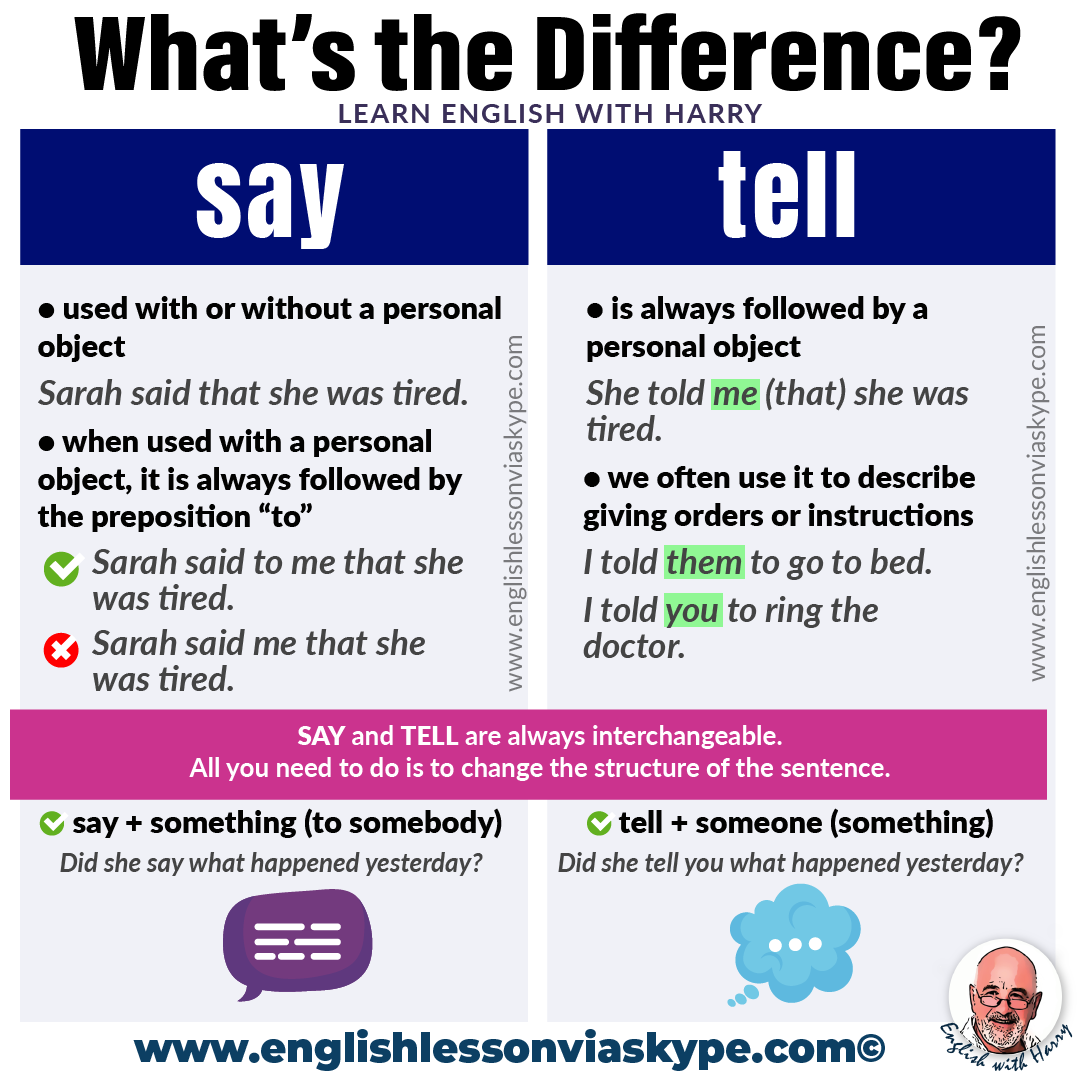
For instance, in the phrase "What does the teacher say?" the focus is on the teacher's spoken words or opinions. On the other hand, "The teacher will tell you the answer" implies a transfer of information, often with the expectation that the recipient will understand or remember the information provided.
Real-World Applications: Avoiding Miscommunication
The correct usage of "say" and "tell" can be seen in various contexts, from professional settings to everyday interactions. Misusing these verbs can lead to misunderstandings, misinterpretations, or even conflict. By applying this knowledge, you can refine your language skills and avoid potential pitfalls.
- Business communication: In a meeting, a manager may tell an employee to complete a task, while also saying that it's essential to meet the deadline. While "tell" conveys the action, "say" emphasizes the importance.
- Personal conversations: When asking a friend for advice, you might say, "What do you think about this?" implying their opinion or insight. In contrast, if you tell a friend a story, you're conveying a sequence of events or information.
- Instructional scenarios: In a classroom setting, a teacher may tell students to solve a math problem, while also saying that it's a challenging exercise. The teacher's intention is to inform and instruct, using both verbs to convey the task and its significance.
Practicing Correct Usage: Making Language Mistakes a Thing of the Past
Mastering the distinction between "say" and "tell" can significantly enhance your language abilities and make you a more effective communicator. To reinforce this knowledge, practice recognizing and applying the correct usage in various contexts. With time and experience, you'll become more confident and precise in your communication, reducing the likelihood of misunderstandings and miscommunication.
Do They Say Y All In Arizona At Rita Pablo Blog
Do They Say Y All In Arizona at Rita Pablo blog
Diferencia Entre Said Y Told En Inglés. Diferenciando – UXDNYH

Diferencia Entre Said Y Told En Inglés. Diferenciando – UXDNYH
English Grammar Here - Page 589 Of 995 - Grammar Documents And Notes

English Grammar Here - Page 589 of 995 - Grammar Documents and Notes
How To Tell If Water Pump Is Pumping

How To Tell If Water Pump Is Pumping